
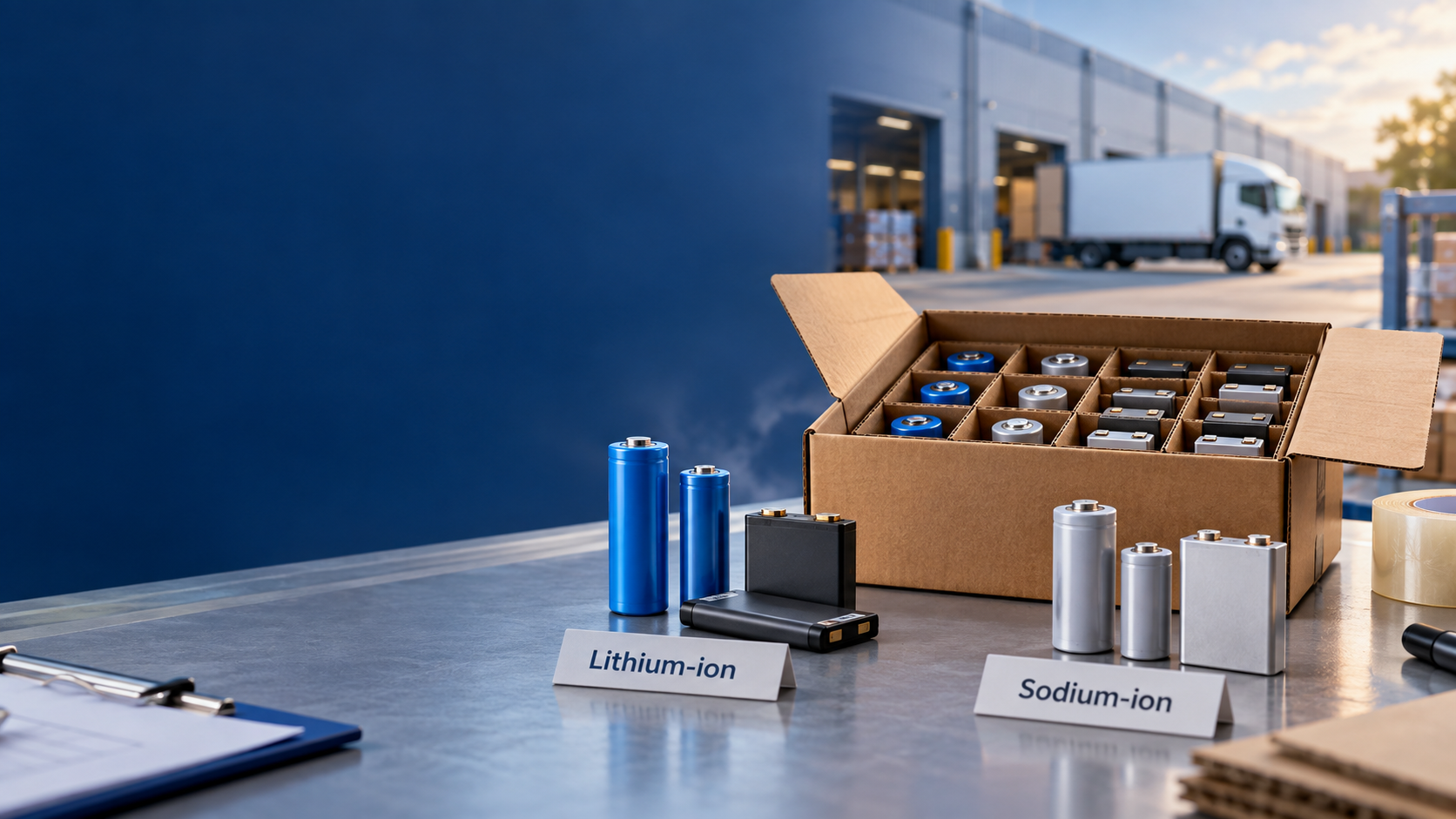

Transport of Small Lithium and Sodium-Ion Batteries by Air, Road and Sea
Practical Dangerous Goods Training for Shipping Small Batteries Safely and Compliantly
Lithium and sodium-ion batteries are widely used in electronic equipment, tools, medical devices, communication systems and consumer products. Although many small batteries qualify for simplified transport provisions, they remain subject to specific safety and regulatory requirements.
Incorrectly classified, packaged or labelled battery shipments can result in transport delays, rejected consignments, safety incidents and regulatory non-compliance.
Our Transport of Small Lithium and Sodium-Ion Batteries by Air, Road and Sea training course provides participants with the practical knowledge needed to identify, prepare and dispatch small batteries and battery-powered equipment in accordance with the applicable dangerous goods transport requirements.
The course focuses on the provisions applicable to smaller batteries, including relevant exceptions and simplified requirements, helping businesses understand their responsibilities without the complexity of a full dangerous goods training program.
Course Overview
Shipping small lithium and sodium-ion batteries requires an understanding of how batteries are classified, the applicable transport restrictions, and the packaging, marking, labelling and documentation requirements.
Importantly, the requirements differ depending on whether batteries are transported by air, road or sea.
This course introduces participants to the relevant provisions of:
-
Air: International Air Transport Association Dangerous Goods Regulations (IATA DGR) and applicable ICAO requirements.
-
Road: Australian Code for the Transport of Dangerous Goods by Road & Rail (ADG Code).
-
Sea: International Maritime Dangerous Goods (IMDG) Code.
Participants learn how to distinguish between batteries shipped separately, batteries packed with equipment and batteries contained in equipment, and how these configurations influence transport requirements.
The course places particular emphasis on small batteries that may qualify for simplified transport provisions, including Section II requirements where applicable for air transport and relevant special provisions for road and sea transport.
What Will You Learn?
Upon completing the course, participants should be able to:
-
Identify the differences between lithium-ion, lithium-metal and sodium-ion batteries.
-
Recognise the relevant UN numbers and battery transport classifications.
-
Understand the limitations applicable to small cells and batteries.
-
Distinguish between batteries shipped alone, packed with equipment or installed in equipment.
-
Identify the packaging requirements for different transport modes.
-
Apply appropriate battery marks, labels and package identification.
-
Recognise when dangerous goods transport documentation is required.
-
Understand the requirements for protecting batteries against short circuits, damage and accidental activation.
-
Identify when a battery shipment falls outside the scope of simplified transport provisions and requires additional training, controls or specialist assistance.