Dangerous Goods Training
Classroom Training or Self-paced Online Training?
Jun
ORP DG PRO: “there is a real upswing coming for dangerous goods classroom training, but not as a replacement for self-paced online training”.
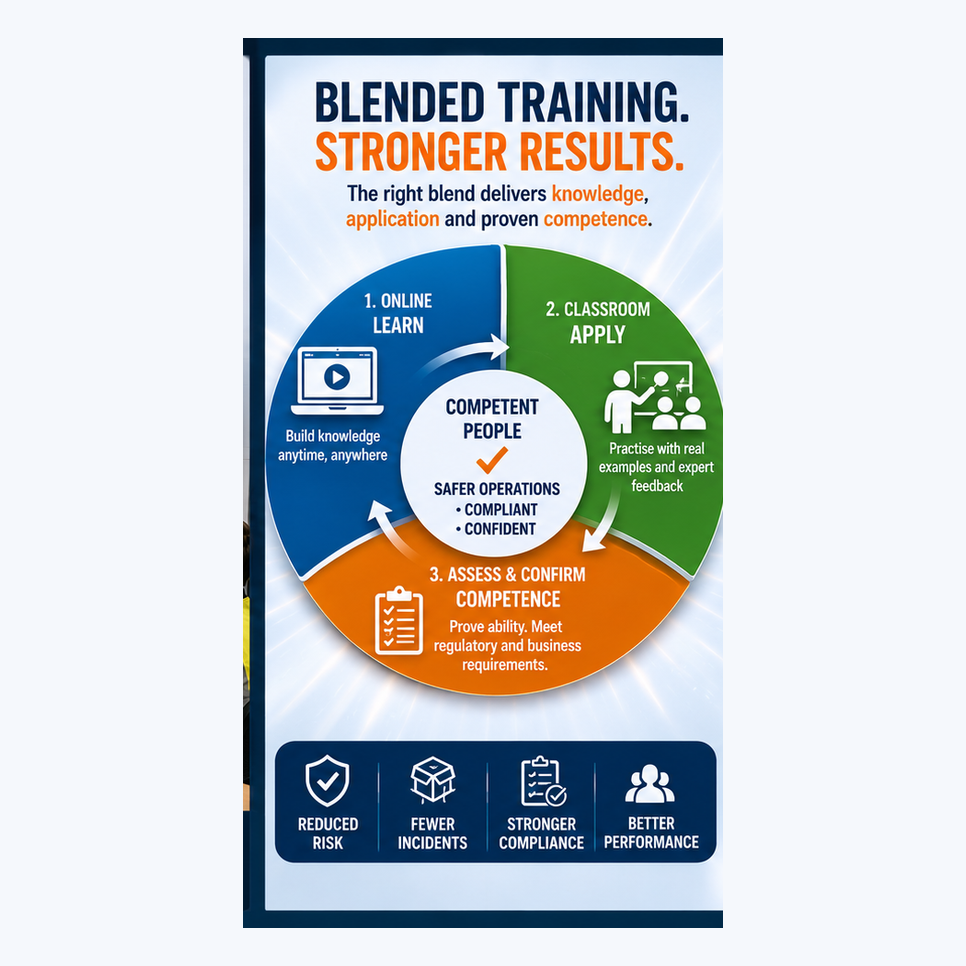
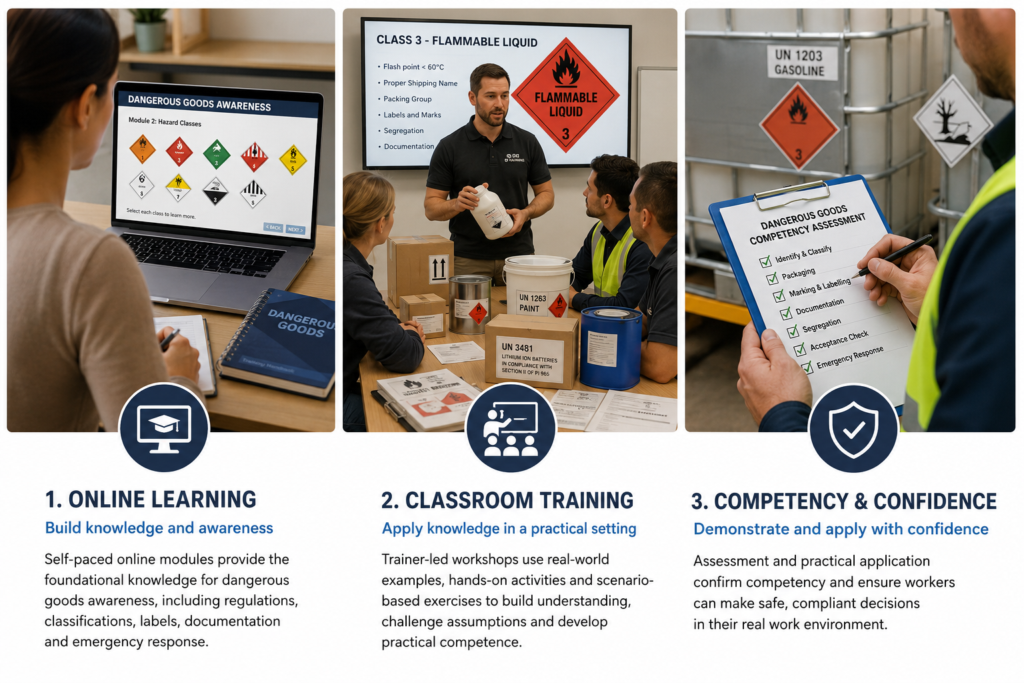
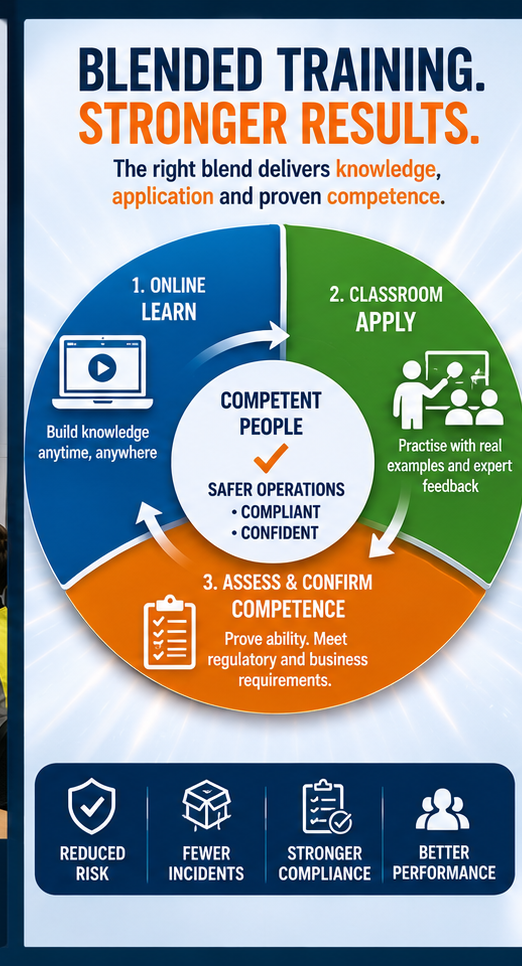
The stronger market is likely to be blended training: online for awareness and theory, classroom or live virtual for applied competency, judgement, and scenario work.
For dangerous goods, the issue is not just “have they completed a module?” It is whether the person can correctly classify, identify, pack, mark, label, document, segregate, accept, reject, store, or respond to dangerous goods in the real workplace. That pushes the market back toward trainer-led learning, especially for higher-risk roles.
Why classroom training is likely to regain value
The biggest driver is competency-based training. For airfreight, for example, the training system has moved dangerous goods training toward competency-based training and assessment, meaning training should be linked to actual job functions rather than generic one-size-fits-all content.
That matters because dangerous goods work is full of grey areas:
- Is this product regulated or not?
- Is it limited quantity, excepted quantity, SP188 lithium battery, section I or section II lithium battery, or fully regulated?
- Is the SDS transport section reliable?
- Does this package need a hazard label, mark, placard, marine pollutant mark, orientation arrows, or overpack mark?
- Can these goods be packed, staged, loaded, or stored together?
- When should staff stop and escalate?
Self-paced online training can explain these points, but it often struggles to test real judgement. Classroom training lets the trainer challenge assumptions, use actual SDSs, packages, labels, transport documents, and workplace examples.
Where online training still wins
Self-paced online is not going away. It is still very strong for:
- general dangerous goods awareness;
- induction training;
- refresher training;
- low-risk or low-complexity roles;
- large distributed workforces;
- pre-course learning before a classroom session;
- evidence of completion and training records.
For sea freight, shore-side personnel involved in activities such as packing, marking, labelling, placarding, loading/unloading cargo transport units, or preparing dangerous goods transport documents require general and function-specific training. AMSA’s current guidance states this clearly for shore-side personnel.
That type of requirement creates a large volume of training demand, and online delivery is efficient for the lower-complexity part of that demand.
Where classroom training has the strongest advantage
Classroom or live trainer-led training is strongest where the role involves decision-making, not just recognition. Examples:
| Role / task | Best delivery model |
|---|---|
| General DG awareness | Online or short live session |
| Warehouse staff recognising DG | Online plus toolbox discussion |
| Packers preparing DG packages | Classroom / practical workshop |
| Sea freight documentation | Classroom or live virtual with exercises |
| Air freight DG shipper training | Trainer-led, competency-assessed |
| Lithium battery classification and packing | Classroom / workshop |
| DG acceptance checks | Classroom with case studies |
| Spill response / emergency actions | Practical face-to-face drill |
| Supervisors and managers | Blended, with scenario-based assessment |
The more the person has authority to make a compliance decision, the more valuable classroom training becomes.
“Online dangerous goods training is useful for awareness. Classroom training is where competency is tested, mistakes are corrected, and workers learn how to apply the rules to their actual freight, chemicals, packages, documents and workplace layout.”
Many organisations are probably over-relying on online modules because they are cheap and easy to issue. But when there is an incident, rejected shipment, undeclared dangerous goods event, lithium battery fire, segregation failure, or regulator question, the issue becomes whether the training was suitable, role-specific and effective.
ORP DG PRO’s Training Programs
For a dangerous goods training business, we would not position classroom training against online training. We would position classroom training as the premium compliance assurance layer.
We are re-positioning our training programs:
- Online awareness module
Basic recognition, classes, labels, SDS, documentation awareness, emergency basics. - Classroom applied workshop
Role-specific exercises using real products, SDSs, packages, consignment scenarios, segregation examples, lithium battery examples, and documentation. - Competency assessment
Practical scenarios, written checks, supervisor sign-off, and records aligned to the worker’s function. - Refresher / microlearning
Short online updates when regulations, internal procedures, or product profiles change.
That model gives you, the client, the convenience of online training but the defensibility of applied competency.
